





If the community didn’t need much persuasion to take risks in the kitchen, it’s because they have an adventurous spirit. Gujarat has a long history of trans-oceanic trade because of its long coast. Gujarati merchants did business with Arab traders from the tenth century, when the region was ruled by the Solanki or Chaulukya dynasty, to the 16th century, when Muslim sultans reigned. From the 16th century, they took advantage of the Portuguese colonial network, foraying into colonies in East Africa and Oman. And in the 19th and 20th centuries, they settled in British colonies in Africa such as Uganda, Kenya, Zimbabwe and South Africa, places that still have large Gujarati diasporas.
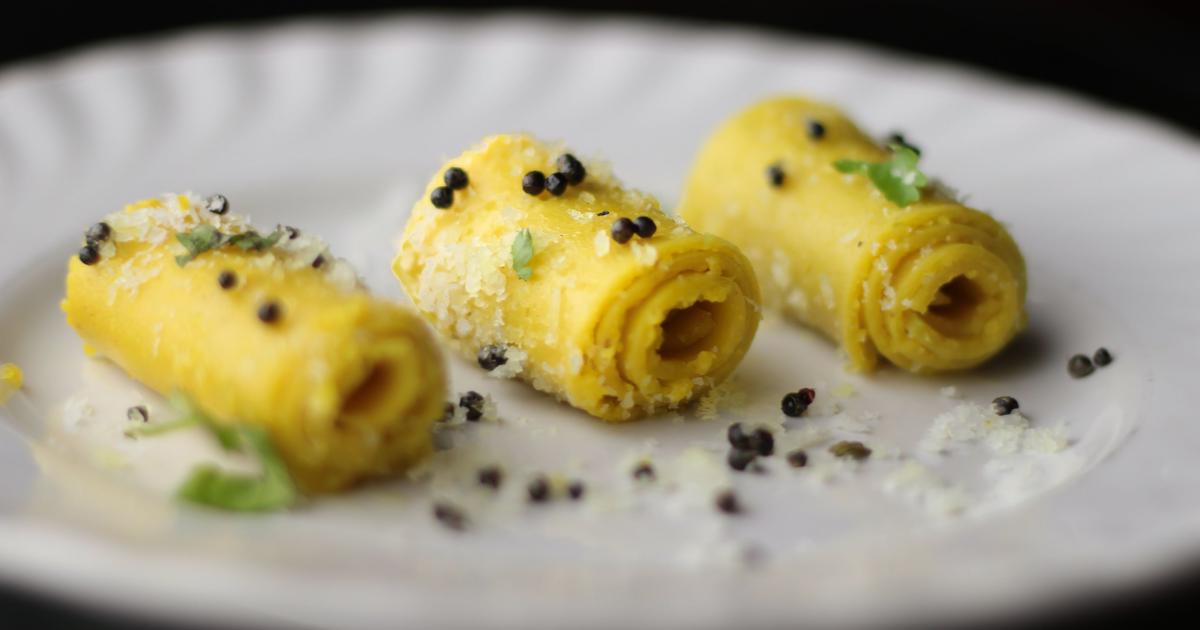
Could it be that the reason Gujaratis have such a dazzling range of farsan is because dry and deep-fried snacks travel well? Who has not travelled around the country or the world, and seen large Gujarati groups snacking on homemade thepla, the thin roti made of wheat and gram flour and flavoured with fenugreek, or dipping into bags of sev-gathiya? While all communities have indigenous snacks, few have the variety produced in Gujarati kitchens. In the traditional scheme of things, nasto or the genre of dry snacks, is made in large quantities at home and stored. Typically, home cooks or freelance nasto makers summoned to people’s kitchens begin making months’ worth of dry snacks in the run-up to Diwali. Most of these snacks are forms of besan. Sev is made by extruding chickpea batter into a vat of boiling oil. Gathiya are thick fingers of besan so called because the extruded batter curls into knots or ganth in the oil. The most popular kind is Bhavnagari gathiya, named after the city of Bhavnagar, which is famous for the stuff. Bhuso, literally sawdust, is a mix of various kinds of gathia and sev. Fafda are crisp strips of fried besan that are paired with jalebi. Chevdo is what Maharashtrians called chiwda, a toss-up of beaten rice, peanuts, dried coconut and cornflakes, among other ingredients. Chorafali is a fluffy stick made by deep-frying a batter of besan and lentils. And khakra, that incredibly versatile crisp disc of dough that is sold in an infinite number of flavours. Gujaratis like to sprinkle plain khakra with jeeralu, a spice mix made of jeera (cumin), black salt, dried ginger, pepper, hing (asafoetida) and amchur (dried mango powder).
For many, it’s more convenient to buy nasto and farsan from shops that specialise in Gujarati snacks. These shops are responsible for taking Gujarati snacks beyond the community and making items such as dhokla and khandvi popular across the country. Today, farsan shops are big establishments spread across Mumbai. However, the early ones were small-scale businesses started by homemakers and community organisations in Gujarati pockets in the island city and suburbs. Gogo Snacks is a fine example. It continues to be a modest, family-run store in Chowpatty but it is renowned for its green pea ghughra, samosas, pickles and nasto.
Gogo was started in 1974 by Hemanti Shah, a homemaker living in Chowpatty, with the encouragement of her husband, Arvind. She sold the gold bangles she’d been gifted by her mother-in-law to buy a stove and large utensils. Her first orders came from friends for Dussehra snacks –wafers, pani puri, samosas, pattice, kachori, khaman dhokla, khandvi. Soon, Shah was supplying farsan to restaurants at the Taj. Where does the chirpy name come from? Hemanti’s daughter Asha Kapadia told me that in 1974, the young daughter of Arvind’s friend asked the Shahs to name their fledgling business Gogo. It sounded catchy, so without giving it too much thought, the couple acquiesced.
Aside from farsan, Gogo is famous for undhiyu, the Surti winter vegetable. Many farsan stores sell undhiyu by the kilo in season for it takes time and effort – commodities modern families are short of – to prepare and cook the multitude of ingredients that go into the dish. It appears on restaurant menus too at the end of the year. Soam, for instance, procures vegetables from Surat itself for its undhiyu. As does Hiralal Kashidas Bhajiwala, a veteran farsan shop and restaurant – it was founded in 1936 – in the Gujarati neighbourhood of CP Tank. The dish gets its name from the Gujarati word “undhu”, meaning upside down. It refers to the traditional way undhiyu is cooked – in a clay pot buried in the earth and heated with coals placed above.
Each undhiyu is different, and Gogo’s distinguishes itself with its vivid green colour, which evokes a vegetable market in wintertime, when the light makes produce appear lush. At Gogo, the cooks make restrained use of turmeric, coriander and cumin powder and avoid red chilli powder altogether in order not to dim the green with yellow and brown.
Typically, undhiyu has Surti papdi (field bean), potato, kand (purple yam), sakhariya (sweet potato), chunks of unpeeled Rajagiri banana, ariya kakdi (a seedless cucumber), small brinjal and muthiya (fried besan and fenugreek dumplings). The potatoes and brinjals are incised and stuffed with a paste of coconut, green garlic, green chilli, coriander, cumin and coriander powder, turmeric, lemon and sugar. The medley is prepared in layers, starting with vegetables that take longer to cook, and more paste is added to the vegetables as they are sautéed. The result is a many-textured dish with the characteristic sweet-sour-spicy Gujarati flavour.
What you will not find anywhere in the city, save at a rare pop-up meal by a home cook, is mutton undhiyu or the simpler mutton in Surti papdi. (Parsis make a version called papdi ma gos.) Nor will you find meat and fish dishes cooked by Hindu Gujaratis such as the Rajputs, Khatris and Ghanchis, the last being the caste to which Prime Minister Modi belongs, though he’s vegetarian. For mutton tapelu, a Khatri mutton curry that’s eaten with puris, you will have to wrangle an invite to a Khatri home or visit Surat. For a rich mutton nu shaak cooked in the style of Gujarat’s royal families, a stay at a palace-turned-boutique hotel in an erstwhile princely dominion is necessary. The Gujarati community in Bombay might be a microcosm of the home state but the dominant culture in the food sphere is that of the vegetarian banias and Jains, which is why a Surti dal gosht is a rare thing, whereas dhokla is everywhere.
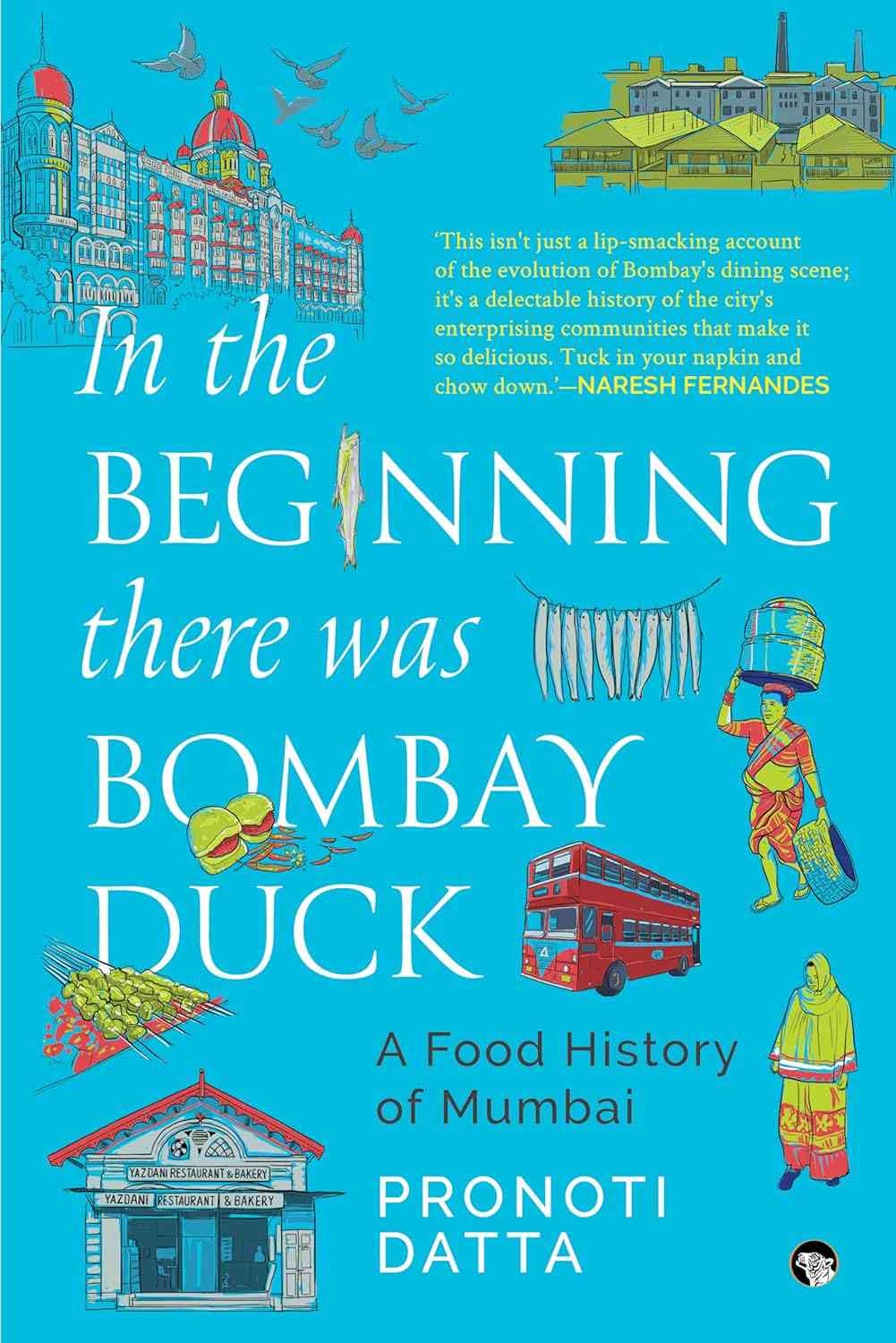
Excerpted with permission from In the Beginning There Was Bombay Duck: A Food History of Mumbai, Pronoti Datta, Speaking Tiger Books.
